
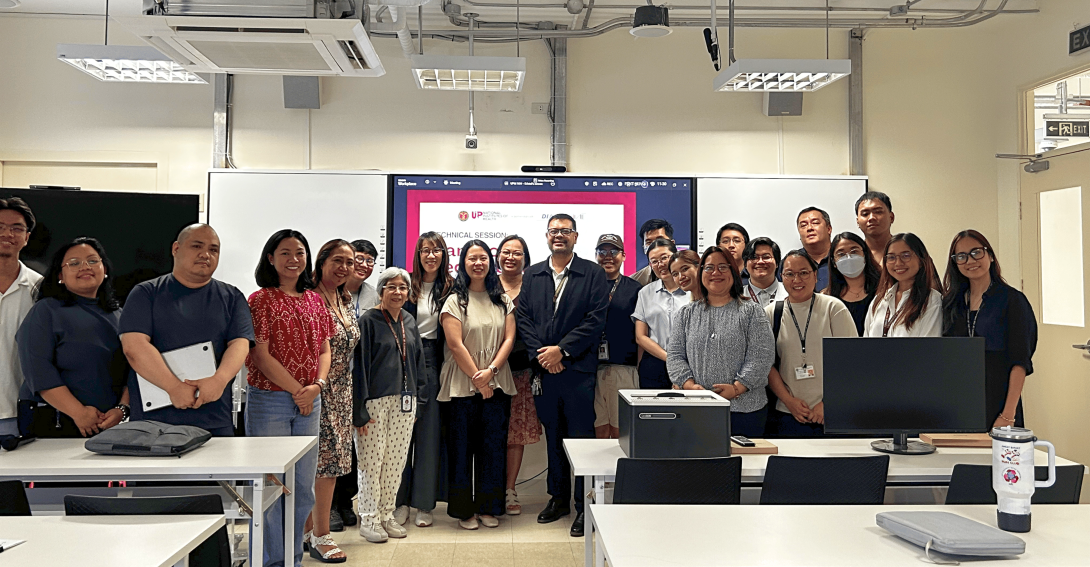
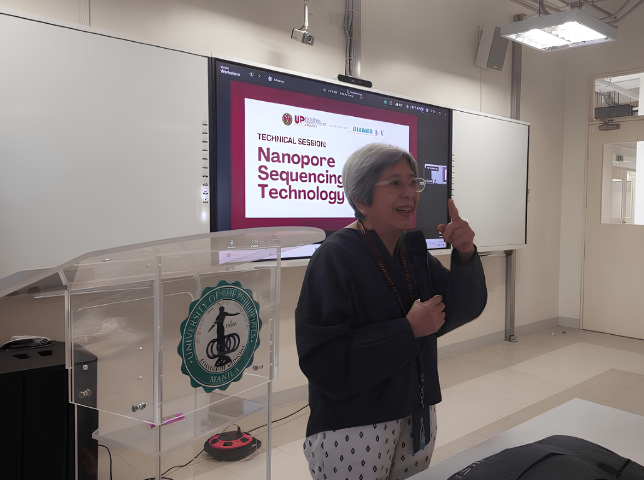
The National Institutes of Health (NIH), University of the Philippines Manila, in partnership with Diamed Enterprise and Oxford Nanopore Technologies, held a Technical Session on Nanopore Sequencing Technology on 23 July 2026 at the Henry Sy Sr. Building, UP Manila.
To open the session, Dr. John Mark S. Velasco, NIH Deputy Director for Strategic Initiatives and Emerging Programs, highlighted how advances in sequencing are transforming research, diagnostics, and public health. He also emphasized NIH’s commitment to equipping the next generation of scientists with the knowledge, facilities, and tools needed to address health challenges.
Following the opening remarks, Ms. Janella Arganda, Business Development Executive of Diamed Enterprise, introduced the company and its work in providing equipment and laboratory solutions for molecular biology, diagnostics, and omics research. She also discussed Diamed’s partnership with Oxford Nanopore Technologies, which aims to make sequencing technologies and technical support more accessible to local researchers.
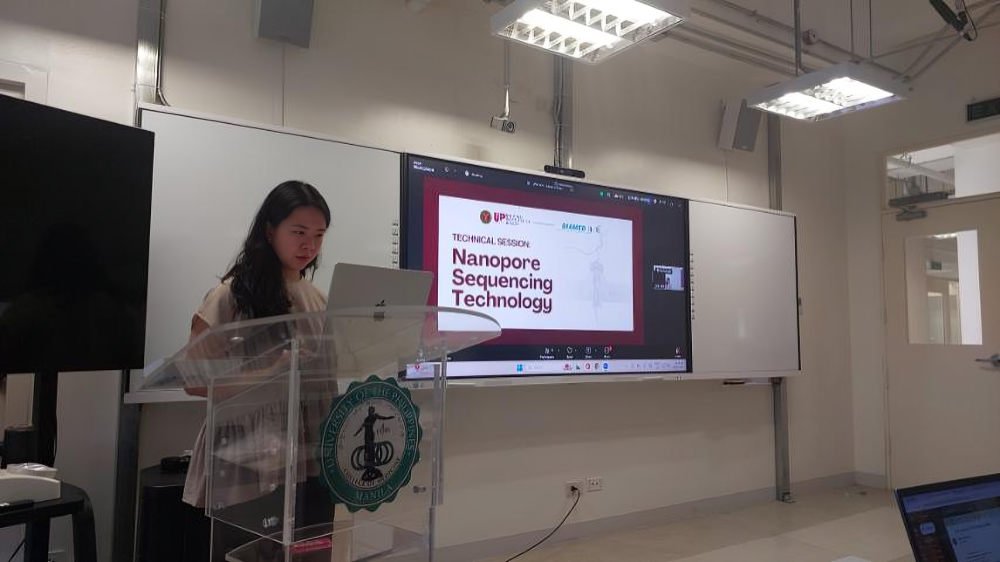
The lecture proper began with Dr. Yifen Tan, Associate Director for Technical Services-Southeast Asia of Oxford Nanopore Technologies, who introduced the basic principles of nanopore sequencing. She explained how the technology converts electrical signals from DNA or RNA passing through nanopores into sequence data. She also presented its key features, including real-time analysis, direct DNA and RNA sequencing, short to ultra-long reads, and the detection of genetic and epigenetic variations.
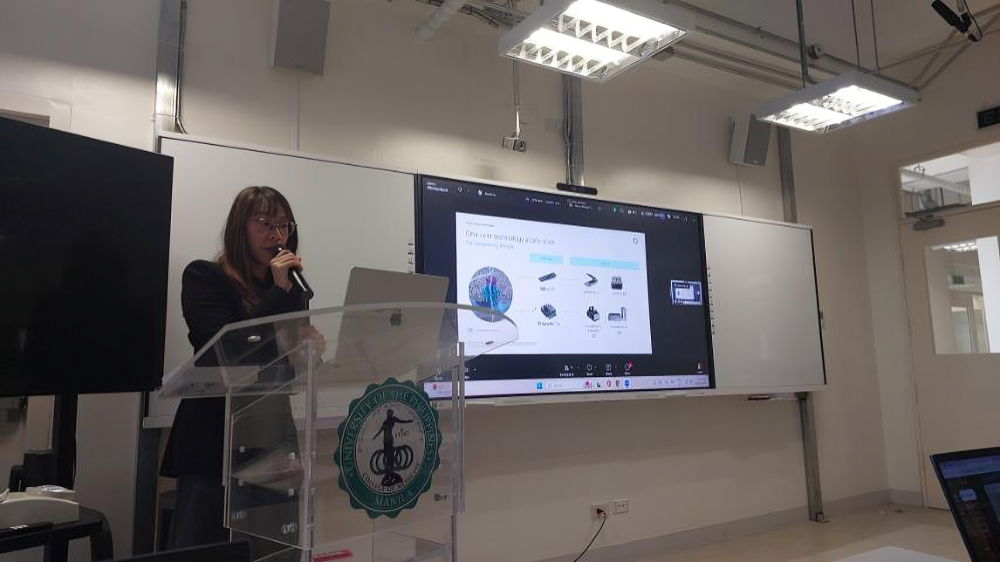
The succeeding lecture was delivered by Ms. Vania Gavrila Wikasa, Field Applications Scientist-Southeast Asia, who discussed the applications of nanopore sequencing in human genetics, rare disease research, cancer research, microbiology, infectious disease surveillance, and microbiome studies. She also explained how long-read sequencing can support the identification of complex genetic variations, genome assembly, phasing, and the analysis of DNA modifications.
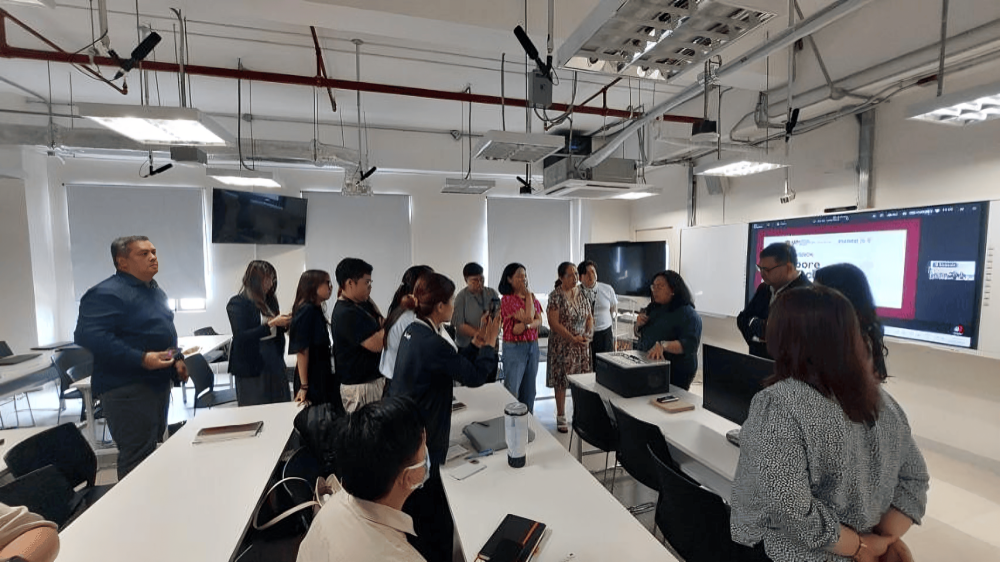
Following the lectures, an open forum was held, during which participants asked about sequencing platforms, data quality, technical requirements, research applications, equipment acquisition, and technical support. Participants were also given a demonstration of Oxford Nanopore sequencing equipment.
Toward the end of the session, NIH Executive Director Dr. Marissa M. Alejandria shared NIH’s plans to expand its research capabilities, including the establishment of a central sequencing core facility in the new NIH building. The planned facility is envisioned to support UP Manila researchers and strengthen collaboration with research institutions in the Philippines and abroad in addressing emerging health concerns.
Overall, the activity brought together researchers, faculty members, laboratory personnel, students, and health professionals interested in sequencing technology and its potential applications in health research.
NIH extends its appreciation to Diamed Enterprise, Oxford Nanopore Technologies, the resource speakers, and all participants for their support and participation.